

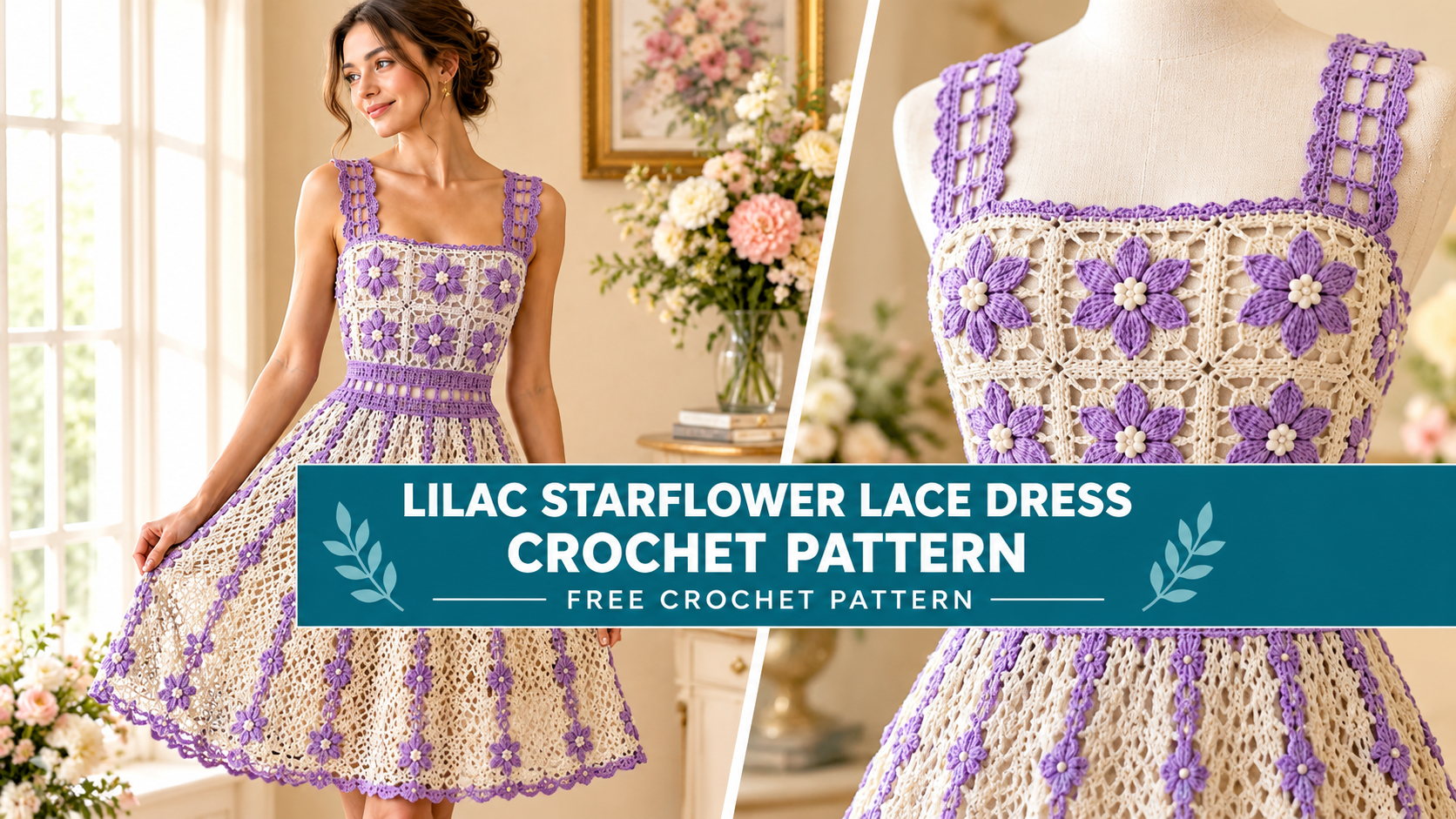
Some crochet projects feel like homework. This one feels like magic. The Lilac Starflower Lace Dress combines airy stitchwork with a silhouette that actually flatters, and it photographs like something from a boutique window. Fair warning: you will not stop staring at it.
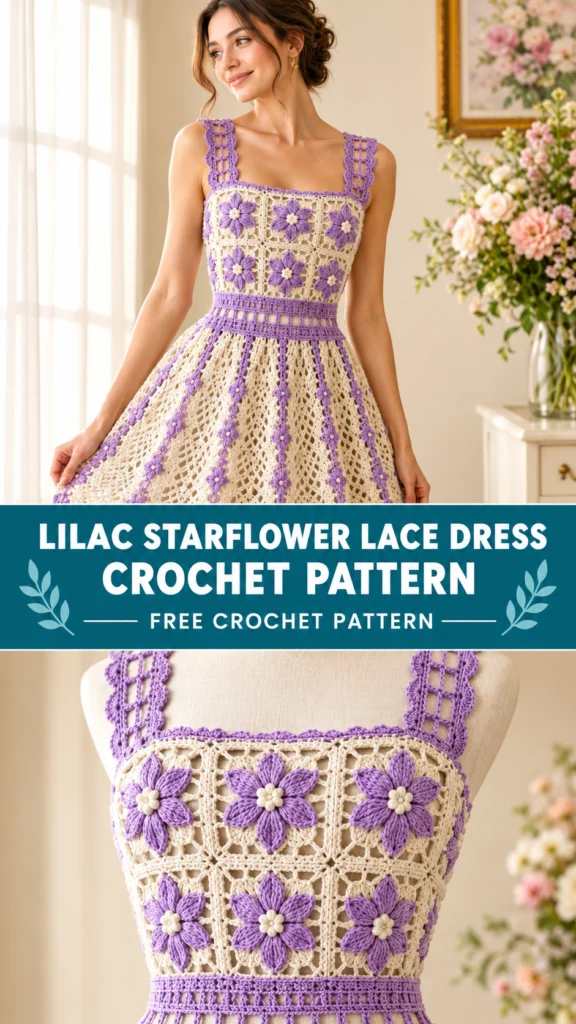
Why the Lilac Starflower Lace Dress Steals the Show
This dress balances romance and wearability better than almost anything else on your hook. It looks delicate and ethereal, but the construction keeps it practical enough for real life.
The lilac color choice does serious work. Soft lilac flatters nearly every skin tone and reads as dreamy without veering into bridesmaid territory. It pairs beautifully with white, cream, denim, and silver accessories.
IMO, the starflower motif is the real star here. Each bloom radiates from a center point with pointed petals, creating genuine texture and visual depth rather than flat lace.
Want a dress that works for garden parties, weddings, and date nights alike? This one earns its place in your closet.
Choosing Yarn That Makes the Lace Sing
Lace dresses live and die by yarn choice. Get it wrong and your delicate starflowers turn into a heavy, shapeless sack.
Best Fiber Options
- Cotton-silk blends: Luxurious drape, subtle sheen, holds lace detail beautifully.
- Mercerized cotton: Crisp stitch definition with a gentle shimmer.
- Bamboo-cotton blends: Silky, flowing, and cool against the skin.
- Fine merino or alpaca: Warm and soft for autumn and winter versions.
Skip heavy acrylics. They pill, they sag, and they completely kill the delicate lace aesthetic.
Weight and Yardage
Fingering or sport weight yarn works best for that airy, ethereal drape. Anything chunkier turns the lace sections into dense fabric.
Plan on roughly 1,200 to 1,800 yards depending on dress length and your size. Buy an extra skein — dye lots are unforgiving and running out mid-panel is devastating.
Lilac Shades Worth Trying
Lilac covers a wider range than most people realize:
- Pale lavender: Soft, barely-there purple with a dreamy quality.
- True lilac: Classic, romantic, and slightly vintage.
- Deep violet-lilac: Richer and more dramatic.
- Lilac with silver threads: Adds literal sparkle to the starflower centers.
Pick a shade that flatters your undertones. Cool-toned folks shine in true lilac; warm-toned folks rock deeper violet-lilac.
Stitches and Skills You’ll Need
Good news: the starflower motif looks complex but relies on stitches you already know. The magic lives in the arrangement, not the technique.
- Chain (ch): Foundation and the open lace gaps.
- Slip stitch (sl st): Joining rounds and shaping star points.
- Single crochet (sc): Firm edges and structural rows.
- Double crochet (dc): The main drapey fabric.
- Treble crochet (tr): Creates the sweeping star points.
- Cluster stitches: Build the starflower centers.
- Picot: Optional, but it adds delicate points to the flower tips.
If you can chain, single crochet, and double crochet, you have the foundation. The starflower sections just group those stitches into graceful points.
Step-by-Step: Crocheting the Lilac Starflower Lace Dress
Step 1 — Swatch and Measure Honestly
Gauge decides whether this dress drapes or strangles. Work a 4-inch swatch in the main stitch pattern and measure it before and after blocking.
Count your stitches and rows, then compare against the pattern gauge. Adjust your hook size accordingly — smaller hook for looser tension, larger hook for tighter tension.
Block your swatch the same way you’ll block the finished dress. Lace fabric changes dramatically after blocking, and skipping this step leads to unpleasant surprises.
Step 2 — Build the Bodice
Most versions of this dress start at the neckline and work downward, or start at the waist and work up. Working top-down lets you try it on as you go, which is a huge advantage for fitted garments.
Chain your foundation in a multiple that fits the starflower repeat. Work the first rows in double crochet, shaping gently at the sides.
Mark your increase and decrease points with stitch markers. You’ll reference them constantly as the bodice develops.
Step 3 — Shape the Waist and Bust
Here’s where fit matters most. Decrease gradually toward the waist, then increase again for the bust.
Short rows help here if you want real cup shaping instead of a flat panel. Try it on constantly — crochet fabric behaves differently on a body than flat on a table.
Keep your decreases symmetrical. Asymmetry shows up immediately once the dress drapes.
Step 4 — Work the Starflower Motif
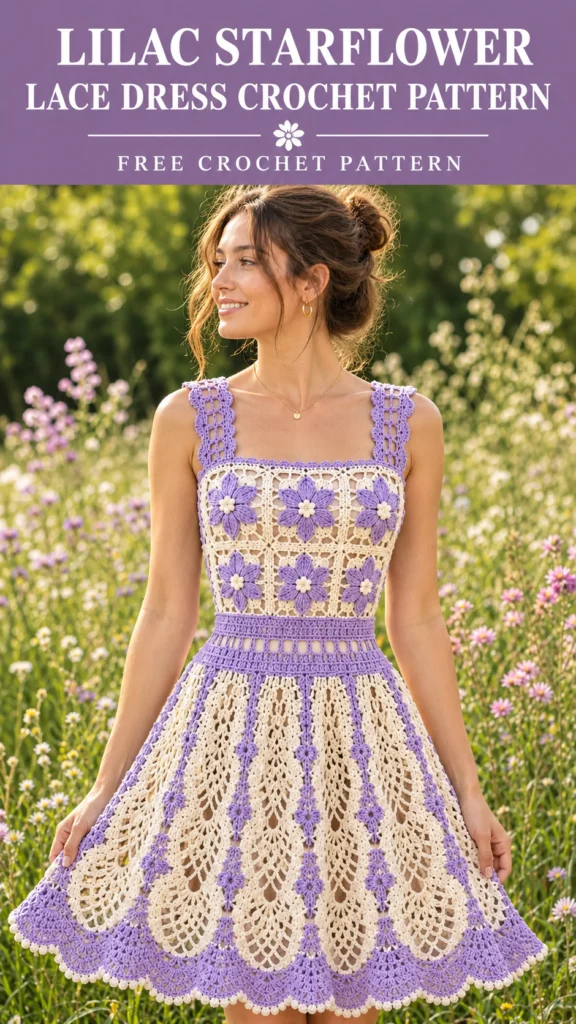
The starflower pattern appears as a repeating motif across the skirt section. Each flower radiates from a cluster center, with treble crochets forming the pointed petals.
Space the motifs evenly across the row. Count your stitches between each flower so the pattern stays symmetrical across the front and back.
Vary the petal height slightly for organic texture. Perfectly uniform flowers look mechanical; subtle variation looks alive.
Step 5 — Build the Skirt
Once you clear the waist, the skirt flares outward. Increase at regular intervals to create that relaxed A-line silhouette.
Continue the starflower motif down the skirt, staggering the flowers between rows. Aligned rows look rigid; staggered rows look natural.
Work until the skirt reaches your desired length. Try it on before you commit to the final rows — crochet stretches with wear.
Step 6 — Add the Border, Sleeves, and Finishing
Work a firm single crochet border around every edge. This stops curling and gives the dress a polished, intentional finish.
For the sleeves, pick up stitches around the armhole and work outward in the lace pattern. Increase every few rounds to create a soft flutter instead of a tight cap sleeve.
Weave in every end and block the finished dress. Blocking transforms this piece from nice to genuinely stunning.
Customizing Fit, Length, and Style
Adjusting for Different Body Types
Lace dresses flatter when they follow your actual curves, not a generic size chart. Take your bust, waist, and hip measurements before you start.
Add or remove increase rounds to match your waist-to-hip ratio. If you’re long-waisted, work extra straight rows through the midsection.
Length Options
A mini version hits mid-thigh and works beautifully as a beach cover-up. Midi length suits garden parties and weddings. Maxi length feels dramatic and formal.
Decide your length before you start the skirt section. The starflower motif needs to land where you want it visually.
Color Variations Beyond Lilac
Lilac is the signature, but the design translates beautifully:
- Soft blush pink: Romantic and wedding-friendly.
- Sage green: Earthy and botanical.
- Pale grey-blue: Moody and elegant.
- Cream: Timeless and bridal-adjacent.
Troubleshooting Common Problems
The dress stretches out of shape. Your yarn has too much give. Switch to cotton or a cotton blend for better structure.
The starflowers look lopsided. Count your stitches between motifs. Uneven spacing shows up immediately once you block the piece.
The waist shaping looks lumpy. You decreased too aggressively. Frog back and spread the decreases over more rows.
The neckline gapes. Add a round of single crochet with slight decreases around the opening to pull it in.
The skirt flares too much. Reduce your increase frequency. One increase every three rounds instead of every two makes a noticeable difference.
You Might Also Like
- Peach Dahlia Table Set Crochet Pattern
- Autumn Dahlia Hair Vine Crochet Pattern
- Mint Luna Moth Crochet Cape Pattern
- Rainbow Pastel Dragon Amigurumi Plush Free Crochet Pattern
- Peacock Feather Placemat Crochet Pattern
FAQ’s
How long does this dress take to make?
Plan for 30 to 50 hours depending on your speed and chosen length. The skirt works up faster than the bodice once you learn the starflower rhythm.
Is this pattern beginner-friendly?
It suits intermediate crocheters. You need confidence with chain, single crochet, double crochet, and treble crochet before tackling the shaping and lace.
Can I make this dress in a heavier yarn for winter?
Yes. Use worsted weight with a larger hook and expect a denser, warmer dress. The starflower detail softens but still reads clearly.
How do I block a dress this size?
Use a large blocking mat or a clean bedsheet over a carpet. Pin the dress into shape, spritz with water, and let it dry fully before removing the pins.
How should I wash and store it?
Hand wash in cool water, then lay flat to dry. Never hang it wet — gravity ruins the shaping. Store it folded, not on a hanger.
Can I wear this dress to a wedding?
Absolutely, and it makes a gorgeous guest dress. Choose a midi or maxi length and accessorize with delicate jewelry to keep the look elegant.
A Dress Worth Every Starflower
The Lilac Starflower Lace Dress rewards patience with a garment that feels genuinely magical to wear. It uses accessible stitches, builds through satisfying repeats, and delivers a finished piece that looks like it belongs in a boutique window.
Pick your lilac shade, block it properly, and wear it somewhere worth being seen. Then prepare yourself for the compliments, because this dress attracts them.
FYI, once you finish one, you’ll start planning a second in a different color. Consider yourself warned.


Leave a Reply
You must be logged in to post a comment.